





Content Overview
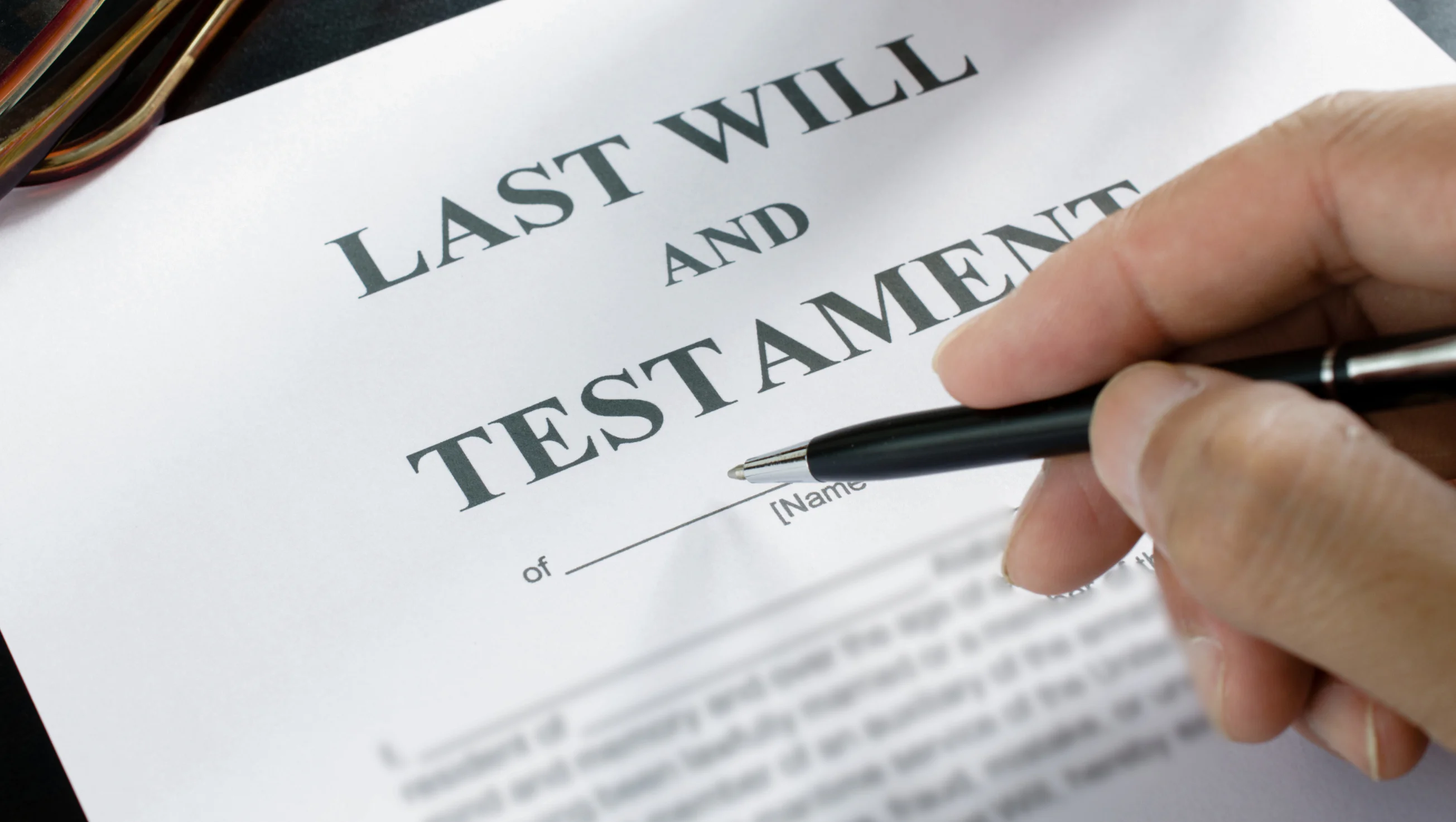
Probate is a mandatory court proceeding to establish the due execution and validity of a will before it can transmit the decedent’s property. Under Philippine law, a will may be submitted for probate during the testator’s lifetime or after death, subject to the applicable procedural requirements.
Under Philippine law, estates are settled either judicially or extrajudicially. Although extrajudicial settlement provides heirs with a more speedy and less costly alternative, its application is legally precluded if the decedent left a valid last will and testament.
What is Probate of Will?
Probate of will is a mandatory special proceeding where a court of competent jurisdiction determines the due execution or the intrinsic validity of a last will and testament as provided by Section 1, Rule 75 of the Rules of Court.
As a general rule, the probate court is concerned only with the due execution or extrinsic validity (formal execution and testamentary capacity) of the last will and testament, unless the face of the will reveals a total failure of testamentary dispositions (such as clear preterition), allowing the court to address intrinsic invalidity as a practical exception. Thus, the central issue in probate is whether the will complied with the legal requirements for its execution.
In Tanchanco v. Santos, G.R. No. 204793 (June 08, 2020), the Supreme Court (SC) clarified that due execution is “whether the testator, being of sound mind, freely executed the will in accordance with the formalities prescribed by law,” as mandated by Articles 805 and 806 of the Civil Code of the Philippines (R.A. 386).
Last Wills and Testaments: Key Provisions Under the Civil Code
Articles 783 to 839, Chapter 2, Title IV of the Civil Code, set forth the rules governing the writing, execution, validity, and probate of last wills and testaments in the Philippines.
Under Article 783, “A will is an act whereby a person is permitted, with the formalities prescribed by law, to control to a certain degree the disposition of this estate, to take effect after his death.”
The making of a will is a strictly personal act, where the law prohibits delegating this dispositive power to third parties (Article 784) and dictates that the extrinsic validity of a will is governed strictly by the laws in force at the time of its execution (Article 795).
Articles 796 to 798 allow only persons who are at least 18 years old, of sound mind at the time they execute the will, and not expressly prohibited by law to make a valid will. Mental capacity is legally presumed under Articles 799 to 801, and married women are explicitly authorized to make wills to dispose of their properties without requiring their husband’s consent (Articles 802-803).
All wills must be in writing and written in a language known to the testator (Article 804), conforming strictly to the rules governing either witnessed notarial wills (Articles 805 to 806) or handwritten holographic wills (Articles 810 to 814). While Article 809 permits substantial compliance for minor, non-fraudulent formal defects, Articles 818 to 819 strictly prohibit the execution of joint wills.
Instrumental witnesses to a notarial will must meet specific legal qualifications are set forth under Articles 820 to 823. Further provisions on the revocation, republication, and revival of wills are also covered under Articles 828 to 837 of the Civil Code.
Article 838 establishes that judicial probate is mandatory, meaning no will can pass real or personal property unless it is proved and allowed in accordance with the Rules of Court.
Grounds for Disallowing a Will
Under Article 839 of the Civil Code, wills shall be disallowed for certain reasons or grounds, including:
“Article 839. The will shall be disallowed in any of the following cases:
(1) If the formalities required by law have not been complied with;
(2) If the testator was insane, or otherwise mentally incapable of making a will, at the time of its execution;
(3) If it was executed through force or under duress, or the influence of fear, or threats;
(4) If it was procured by undue and improper pressure and influence, on the part of the beneficiary or of some other person;
(5) If the signature of the testator was procured by fraud;
(6) If the testator acted by mistake or did not intend that the instrument he signed should be his will at the time of affixing his signature thereto.”
How to Probate a Will in the Philippines
The probate process begins when the petitioner (i.e., either the executor, devisee, or legatee named in a will) files a verified petition with the competent court (First-Level Court or Regional Trial Court, depending on whether the gross value of the estate exceeds PHP 2,000,000.00, or PHP 4,000,000.00 in Metro Manila under R.A. 11576) in the province/city where the decedent resided at the time of death. The original last will and testament, death certificate, and comprehensive list of all known heirs and beneficiaries must be attached to the petition.
Because probate of a will is a proceeding in rem (against the thing), the court will order both the publication of the notice and personal notification to all known heirs and interested parties.
During the trial, evidence must be presented to prove the will’s due execution, which requires the testimony of subscribing witnesses for notarial wills, or handwriting authentication and witness testimony for holographic wills.
Once the court allows the will, it will also appoint a designated executor and issue Letters Testamentary to authorize the administration of the estate. The executor will then conduct an inventory of the assets, pay all outstanding debts and estate taxes, and distribute the remaining property to the heirs—a process where experienced estate and property lawyers assist to ensure full compliance with court procedures.
Uncontested probates may take a minimum of one year to resolve, while contested ones with appeals may take several years. Common factors affecting the timeline include the number of heirs, availability of witnesses, disputes from parties, and court backlogs.
Probate of a Will During the Testator’s Lifetime
Under Section 1 of Rule 76 of the Rules of Court, a probate of a person’s last will and testament during his or her lifetime is allowed under Philippine law. To wit:
“Section 1. Who may petition for the allowance of will. — Any executor, devisee, or legatee named in a will, or any other person interested in the estate, may, at any time after the death of the testator, petition the court having jurisdiction to have the will allowed, whether the same be in his possession or not, or is lost or destroyed.
The testator himself may, during his lifetime, petition the court for the allowance of his will.”
It bears emphasizing that, whether initiated or filed during the testator’s lifetime or after his or her death, probate proceedings are generally governed by the same procedural requirements and evidentiary standards under the Rules of Special Proceedings.
However, under Section 3 of Rule 76, no newspaper publication shall be made where the petition for probate of a will has been filed by the testator himself.
Relevant Jurisprudence on Probate of Wills
For a better understanding of the probate requirements, processes, and effects, here is some relevant jurisprudence:
Proper Probate Proceedings
In Mantel v. Montero, G.R. No. 255214 (January 27, 2025), the Supreme Court (SC) ruled that a Regional Trial Court (RTC) acting in an ordinary civil case has no jurisdiction to approve a will or settle an estate, as such matters must be brought in a special proceeding in accordance with Rule 76 of the Rules of Court. Any order issued by a court beyond its jurisdiction, especially after a judgment has become final and executory, is null and void and produces no legal effect.
Personal Notice to the Heirs
In Racca v. Echague, G.R. No. 237133 (January 20, 2021), the Supreme Court (SC) ruled that serving personal notice to heirs with known residences is mandatory under Section 4, Rule 76 of the Rules of Court. Consequently, trial courts cannot bypass this requirement by relying solely on the rule on publication.
Ownership Disputes and Probate of Wills
In Reyes v. Reyes, G.R. No. 139587 (November 22, 2000), the Supreme Court (SC) clarified that a probate court’s jurisdiction is limited to estate settlement, the probate of wills, and the appointment or removal of administrators, executors, guardians, and trustees.
Questions of property ownership are extraneous matters that the probate court cannot resolve with finality. While the court may provisionally determine ownership solely to decide whether an asset should be included in the estate inventory, this determination is not conclusive and remains subject to a final decision in a separate civil action dedicated to resolving title.
Probate of a Foreign National’s Will
In Gaspi v. Pacis-Trinidad, G.R. No. 229010 ( November 23, 2020), the Supreme Court (SC) clarified that the nationality principle does not apply to the extrinsic validity of an alien’s last will and testament. In probate proceedings involving an alien’s will—whether executed in the Philippines or abroad—the testator’s national law may be pleaded and proved before the probate court. If not, then Philippine law applies by default.
Duran & Duran-Schulze Law (“DDS Law”) is an estate and property law firm in the Philippines that provides expert legal assistance in judicial and extrajudicial estate settlements, including the probate of wills. For legal consultations and inquiries, call us at (02) 8928 9535 (landline) or +639171940482 (mobile), or email info@duranschulze.com.