





Content Overview
Atty. Mary Wendy Duran, our Founding Senior Partner and Head of the Family Law and Litigation Team at Duran & Duran-Schulze Law, recently shared her legal insights into the continuous use of a maiden name after marriage. Her comments were referenced by PhilSTAR Life in their article, “Keeping Your Maiden Name After Marriage: Is It Worth It?” Below is the full interview Q&A.
1. What are the legal options for a woman who chooses to keep her maiden name after marriage?
Under Article 370 of the Civil Code, a married woman is given a menu of options, not a mandate. She may (1) use her maiden first name and surname and simply add her husband’s surname, (2) use her maiden first name together with her husband’s surname, or (3) use her husband’s full name prefixed by a word indicating she is his wife, such as “Mrs.” Because the provision uses the word “may,” Philippine jurisprudence has consistently held that adopting the husband’s surname is a privilege, not an obligation. In Remo v. Secretary of Foreign Affairs (G.R. No. 169202, March 5, 2010), the Supreme Court itself confirmed that “a married woman has an option, but not a duty, to use the surname of the husband.” This means a woman who wants to keep using her maiden name in full needs no court petition, no annulment, and no special government approval to continue doing so in her personal, professional, and most government-issued documents.
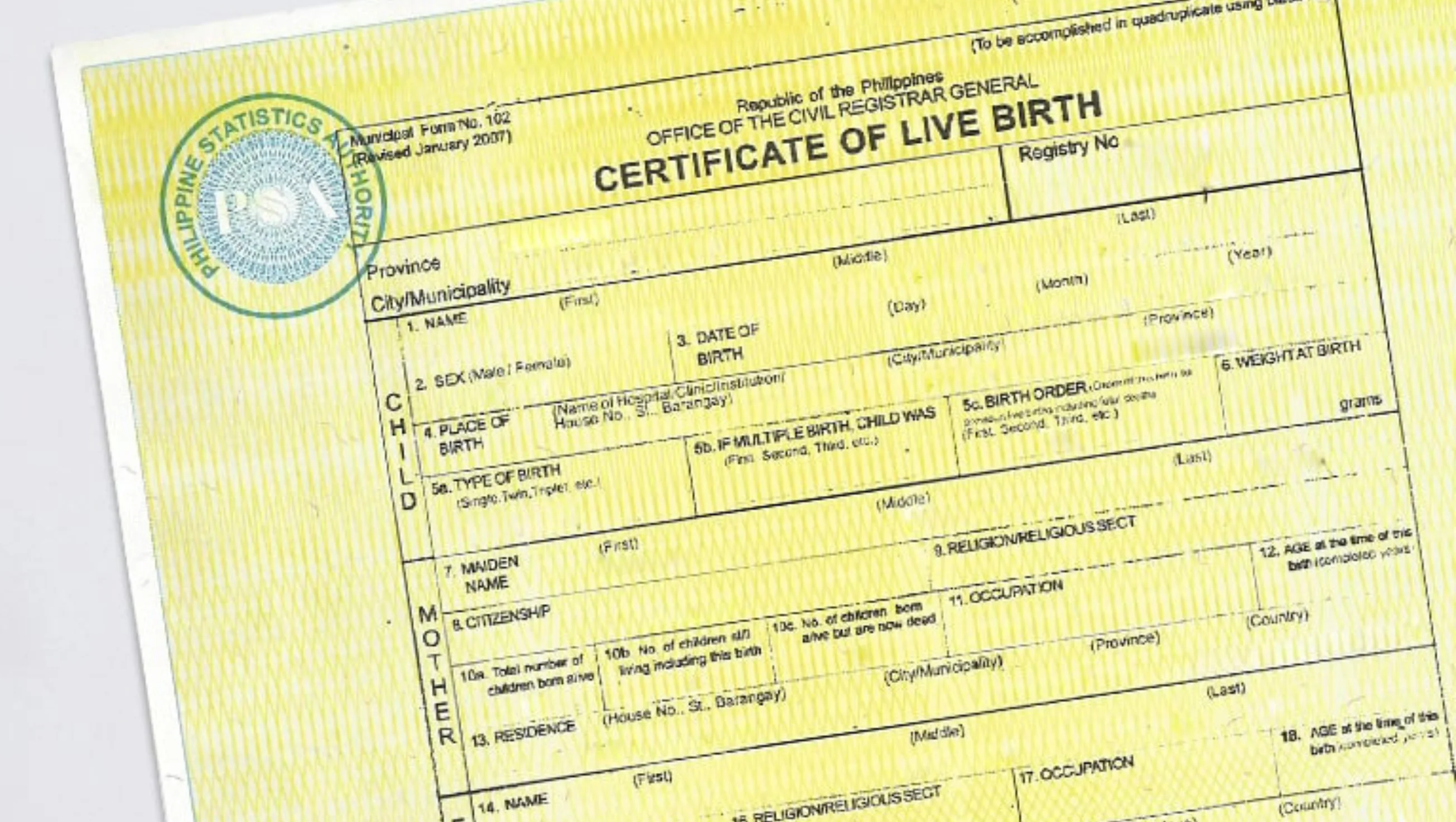
On the passport specifically, the rule has recently changed in the woman’s favor. In Remo, the Supreme Court upheld the old Philippine Passport Act of 1996 (RA 8239), which allowed a married woman who had already used her husband’s surname in a passport to revert to her maiden name only upon annulment, nullity of marriage, legal separation, recognized foreign divorce, or death of the husband. That restriction has now been superseded. Under the New Philippine Passport Act (Republic Act No. 11983, signed March 11, 2024, which expressly repealed RA 8239), Section 5(f) allows a married woman to voluntarily revert to her maiden name upon passport renewal, submitting only a PSA-authenticated birth certificate with no need to prove annulment, legal separation, divorce, or the husband’s death. The law’s proviso is explicit wherein she may avail of this voluntary reversion only once, and all her other existing IDs and records must likewise be updated to reflect the maiden name. The old grounds such as annulment, nullity, legal separation, judicially-recognized foreign divorce, death of husband remain available as a separate, additional basis for reversion under the same section, each requiring the corresponding PSA-authenticated document, and are not limited to the “once only” rule the way voluntary reversion is.
2. What are the advantages of keeping your maiden name from a legal or practical perspective?
Legally, continuity of identity is the biggest advantage. All existing records such as land titles, bank accounts, professional licenses e.g., PRC, IBP, medical board, business registrations, insurance policies, and academic credentials, remain valid without the need for amendment, affidavits of discrepancy, or updated government IDs. This avoids the administrative burden of name-change processes across multiple agencies with SSS, PhilHealth, Pag-IBIG, BIR, PRC, COMELEC, banks, etc..
Practically, professionals who built a reputation, client base, or public record under their maiden name, this is most especially true for lawyers, doctors, authors, entrepreneurs, to avoid confusion or loss of professional recognition. And now, even a woman who did adopt her husband’s surname on her passport is no longer permanently locked into it since RA 11983 gives her a one-time voluntary window to revert later if she changes her mind, which reduces the pressure to “get it right” immediately after the wedding.
3. What are the possible disadvantages or challenges of keeping your maiden name after marriage?
The main friction points are administrative and social rather than strictly legal. Some government offices, banks, schools, or foreign consulates are simply not familiar with a wife’s right to keep her maiden name and may mistakenly insist on the husband’s surname, requiring the woman to explain or cite Article 370 of the Civil Code. There can also be documentary mismatches for instance, if some IDs already show the husband’s surname, perhaps used informally or on one document, while others retain the maiden name, this inconsistency can raise questions during transactions like property purchases, loan applications, or estate settlement.
On the passport side, the rules are more flexible than before but still not unlimited wherein a woman who wants to revert from her married surname back to her maiden name may only do so once under RA 11983’s voluntary-reversion rule, and DFA implementing guidelines require her to then update her other IDs and records to match. So while she is no longer forced to wait for an annulment or her husband’s death, she should still be deliberate and consistent once she decides, since the option to switch back and forth freely does not exist.
4. Overall, what factors should a woman consider when deciding whether to keep or change her surname after marriage?
Key considerations include that of professional and reputational continuity especially for licensed professionals or public figures; the administrative cost and time of updating IDs, titles, and accounts if she changes her name; family and cultural expectations, including how the couple wants their children’s surname to align with either parent; future travel and immigration documentation, since surname consistency across passport, visa, and civil registry documents avoids delays; and long-term implications, such as the fact that reverting a married surname back to a maiden name on the passport is now easier under RA 11983, but is still limited to one voluntary reversion. There is no legally “correct” choice as Article 370 of the Civil Code exists precisely so the decision rests with the woman, and she should choose based on what best fits her professional life, personal identity, and family plans, while being consistent across her documents once she decides.
5. What challenges, if any, can arise when a mother and her children have different surnames when traveling, especially abroad?
Because Philippine children generally carry their father’s surname for legitimate children, under the Family Code, unless the parents agree otherwise for illegitimate children under RA 9255, it is common and legally unremarkable for a mother to have a different surname from her children. However, in practice, such as in the case of immigration officers (Philippine and foreign) may ask a mother to prove her relationship to the child, particularly when traveling without the father, to guard against child trafficking or parental abduction. She should be therefore prepared to present the child’s PSA-issued birth certificate showing her as the mother, her marriage certificate if relevant to explain the surname difference, and, where required, a notarized travel consent or affidavit of support and consent from the father if he is not traveling with them, or a DSWD travel clearance for certain unaccompanied or single-parent travel situations for Filipino minor children. Note that these are not obstacles that prevent travel, but documentary safeguards that should be prepared in advance to avoid delays at the airport or foreign border control.
6. Could having a different surname from your children cause complications during health emergencies or when seeking medical care for them?
In a genuine emergency, hospitals in the Philippines are generally required to provide immediate medical attention regardless of paperwork, under laws protecting emergency care access. That said, a differing surname can still cause friction in practice particularly with hospital staff, insurers like PhilHealth, HMOs, or school clinics may ask a mother to establish that she is indeed the parent or legal guardian before releasing sensitive information, authorizing treatment, or processing insurance claims, especially if she is not the policyholder. To avoid delays, it is prudent for mothers in this situation to carry either physically or digitally the child’s birth certificate, their marriage certificate, and, if applicable, documentation showing they are the registered guardian or HMO dependent-holder. Again, these are practical safeguards rather than legal barriers and a surname difference does not diminish a mother’s parental authority or her right to make medical decisions for her child.
Duran & Duran-Schulze Law (“DDS Law”) handles Family Law and Civil Litigation matters, including administrative and judicial proceedings involving the change or correction of names, marriage-related disputes and proceedings, and other family and civil legal concerns. For legal consultations and inquiries, call us at (02) 8928-9535 (landline) or +639171940482 (mobile), or email info@duranschulze.com.