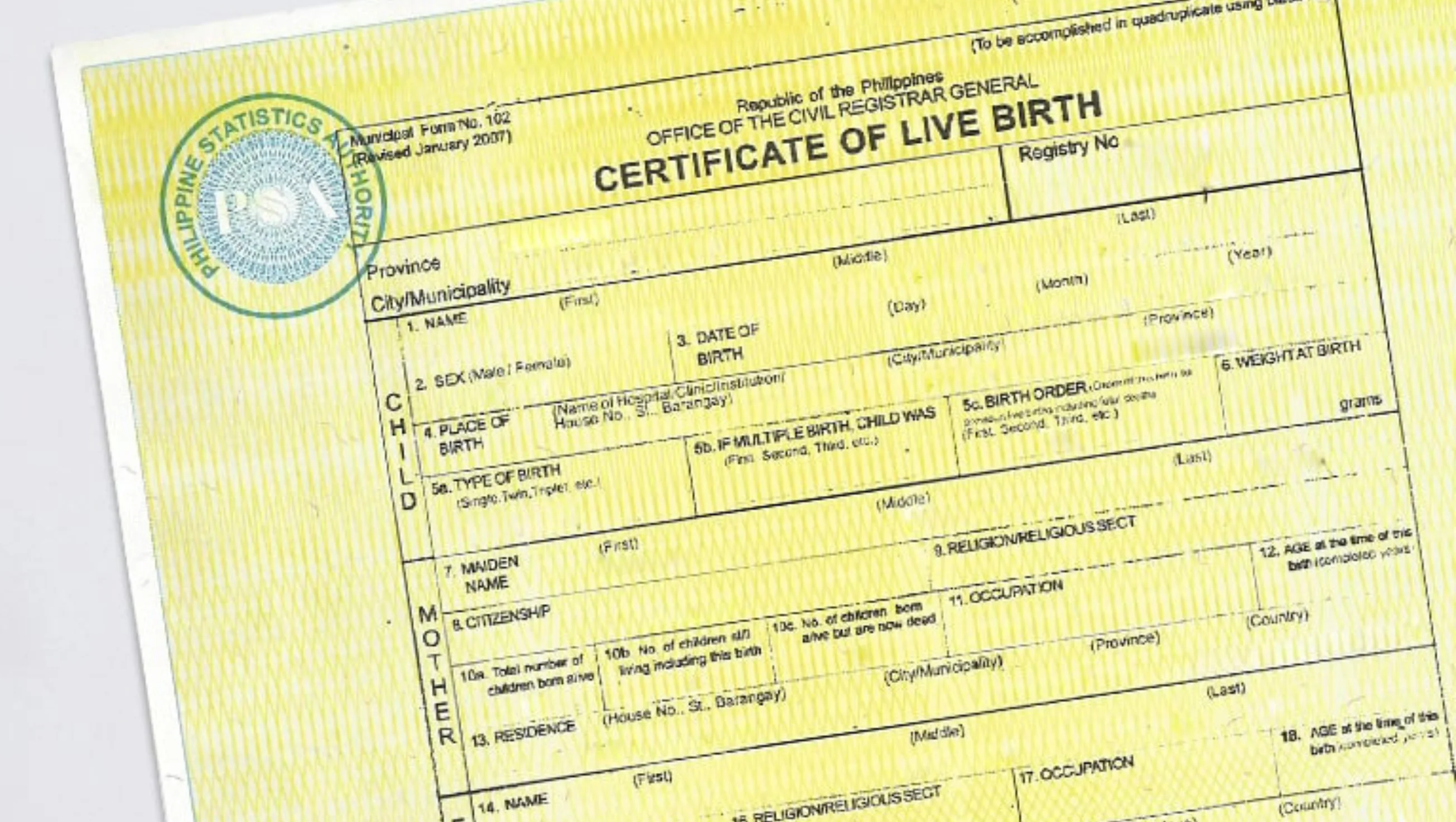






In the Philippines, the integrity of the civil registry is paramount. For instance, a birth certificate serves as the foundational document for an individual’s legal identity. When this record contains substantial errors, such as on parentage, marriage details, names, and others that extend beyond mere typographic or clerical in nature, it can only be rectified through a rigorous adversarial process.
This case study details the successful judicial intervention of Duran & Duran-Schulze Law (“the Firm”) in a Rule 108 court proceeding, demonstrating the Firm’s capability to address strict judicial mandates and leverage international cooperation to correct multiple substantial errors in the Petitioner’s Certificate of Live Birth (or Birth Certificate).
Case Summary – Judicial Corrections of Birth Certificate Errors
The Petitioner’s birth certificate contained multiple long-standing and substantial errors that affected key identity details, including incorrect mother’s names and false parental marriage information. Because these errors and inaccuracies are material, the case required judicial correction rather than mere administrative remedies. The Firm handled the court proceedings that led to the successful rectification of the records and restoration of the Petitioner’s legal identity.
The Petitioner and the Birth Certificate Errors
The Petitioner, a long-term resident of the United States, had a multifaceted legal crisis stemming from five major inaccuracies in her Philippine birth certificate that had remained uncorrected for decades.
In particular, these birth certificate errors were not merely clerical or typographical slips but rather substantial ones. Specifically, her mother’s maiden middle and last names were completely misrepresented and created a legal disconnect in her maternal lineage. In addition, the document contained false details regarding her parents’ marriage, i.e., it was recorded as having occurred in Makati in March 1969 rather than in Manila in April 1969.
As a result, these discrepancies, left unchecked, threatened to invalidate her claims to parentage and created a significant disparity between her official birth record and the identity she had consistently established in her passport, NBI clearance, and baptismal certificates.
The Firm’s Legal Strategy: Procedural Precision and Evidentiary Integrity
Given the gravity of the birth certificate errors, the Petitioner was precluded from using simple administrative remedies and was required to seek judicial relief to restore the integrity of her civil status.
To secure a favorable judgment, the Firm implemented a precise, multi-tiered legal strategy designed to withstand the rigorous scrutiny of Philippine courts. The first focus was on the strict jurisdictional compliance, as procedural lapses in special proceedings for Rule 108 are often fatal to the case. This involved impleading all indispensable parties, including the Petitioners’ siblings, the Civil Registrar, and the Office of the Solicitor General (OSG) and managing the mandatory publication of the court order in a newspaper of general circulation for three consecutive weeks to satisfy the requirements for constructive public notice.
Recognizing the logistical challenges of the Petitioner and her mother residing in the United States, the Firm utilized an International Deposition via Written Interrogatories. By filing an Ex-Parte Motion to authorize this method, the Firm successfully coordinated with the Department of Foreign Affairs (DFA) and the Philippine Consulate General in New York. This ensured that vital testimonies were admissible and seamlessly integrated into the court record, providing the necessary evidence without the prohibitive expense or delay of international travel.
Finally, the Firm’s strategy centered on Rebutting the Presumption of Accuracy attached to public records. While a birth certificate carries prima facie weight, the Firm systematically dismantled the erroneous entries by presenting “competent evidence,” including the parents’ original marriage contract and the birth certificates of the Petitioner’s siblings. By juxtaposing these with the Petitioner’s passport, NBI clearance, and baptismal records, the Firm demonstrated a consistent, decades-long use of her correct identity, proving that the registered document was the sole outlier.
Duran & Duran-Schulze Law provides end-to-end assistance in both administrative and judicial corrections of birth certificate errors, guiding clients through petition preparation, document filing, LCRO or court proceedings, where necessary, and final approval to ensure a smooth and efficient legal process.
The Decision
The Makati City Regional Trial Court, after evaluating the comprehensive evidentiary package presented by the Firm, ruled that the Petitioner had successfully overcome the presumption of accuracy afforded to the original record. The Court granted the petition in its entirety, finding that the evidence clearly established the true facts of the Petitioner’s birth and parentage. Consequently, the Court issued a mandatory injunction directing the Civil Registrar to correct the Petitioner’s middle name, her mother’s full maiden name, and the specific date and location of her parents’ marriage in the official registry.
Conclusion
This successful outcome highlights Duran & Duran-Schulze Law’s expertise in managing Rule 108 proceedings that transcend national borders. By effectively utilizing procedural tools like written interrogatories and maintaining a meticulous focus on jurisdictional requirements, the Firm resolved a decades-old identity crisis for the Petitioner. In the end, this case underscores the necessity of expert legal counsel when dealing with substantial civil registry corrections that require a sophisticated balance of domestic law and international coordination.
About Birth Certificate Corrections in the Philippines
In the Philippines, the correction of civil registry entries is governed by two distinct paths: Republic Act No. 9048 (as amended by R.A. 10172) for administrative corrections, and Rule 108 of the Rules of Court for judicial corrections.
Administrative remedies are limited to “clerical or typographical errors” that can be resolved by the Local Civil Registrar. However, “substantial or material” changes—those affecting civil status, nationality, parentage, or major identity markers—require a judicial order. Rule 108 is an adversarial proceeding where the State, through the Office of the Solicitor General (OSG), may oppose the petition. Success in these cases relies on the petitioner’s ability to provide clear and convincing evidence that the original entry is erroneous, making a well-documented legal strategy indispensable.
For legal consultations and inquiries regarding the judicial and administrative corrections of birth certificate errors in the Philippines, call us at (02) 8928-9535 (landline) or +639171940482 (mobile), or email info@duranschulze.com.