


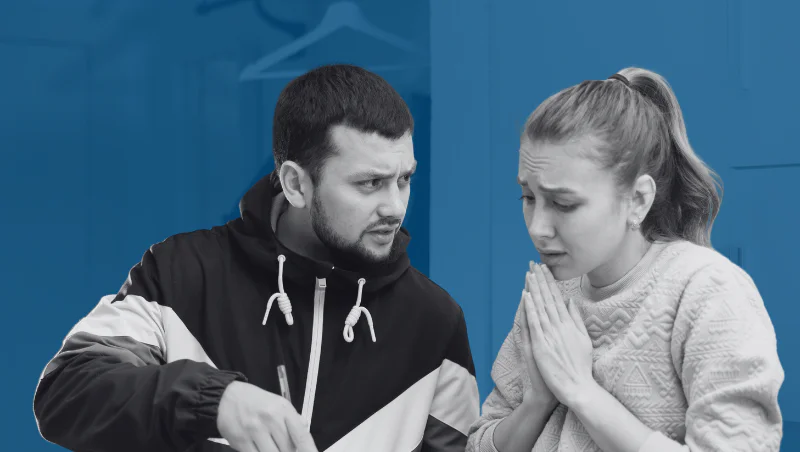



As the law that governs marriages in the Philippines, the Family Code (E.O. 209) does not recognize a spouse’s sexual orientation by itself—whether heterosexual, homosexual, or bisexual—as a ground to annul, nullify, or dissolve a validly contracted marriage between a man and a woman. What the law recognizes are the essential and formal requisites of marriage, as well as specific grounds such as psychological incapacity, fraud of a limited statutory kind, or other legally defined defects of consent.
Dear Atty. Duran,
My husband and I have been married for several years, but I recently discovered that before our marriage, he had long-term romantic relationships with other men. I only learned about this after seeing messages and photos on his phone, and when I confronted him, he admitted that he had been involved in same-sex relationships even before we got married. He never told me about this while we were still dating or before our wedding.
I feel deeply betrayed because I believe I would not have agreed to marry him had I known these facts beforehand.
Since discovering this, our relationship has become strained and I no longer know if our marriage can still work. I would like to ask if his concealment of these past same-sex relationships may be used as a ground for annulment or nullity under Philippine law?
I hope you can give me legal advice on what steps I may take.
Sincerely,
Devastated Wife
Dear Devastated Wife,
Thank you for reaching out. I can only imagine the weight of this discovery. It is completely natural to feel a sense of betrayal when you realize a fundamental part of your husband’s history was kept from you.
To properly assess your concern under Philippine law, a key question needs clarification—Do you believe your husband is homosexual, and are you assuming that his prior same-sex relationships necessarily define his sexual orientation?
On Same-Sex Relationships and Homosexuality
From the modern psychology perspective, engaging in a same-sex relationship does not automatically “make” someone homosexual. There has also been a clear distinction among behavior, attraction, and identity. If you can establish his homosexuality, then we can shift our discussion into what the Philippine law says about it in relation to the dissolution of marriage.
In the Philippines, there is no blanket civil law defining homosexuality. While the Family Code (E.O. 209) does not define homosexuality, the law deliberately excludes it from the institution of marriage, whereby Articles 1 and 2 explicitly define marriage as “a special contract of permanent union between a man and a woman.” However, unlike some jurisdictions, the Philippines has never criminalized consensual same-sex behavior between adults (Manalasta & Torre, 2016).
Notwithstanding the “policy of silence” in the legal landscape, the Supreme Court (SC) has since addressed the concept of homosexuality primarily in three contexts: defining the LGBTQ sector, annulment cases, and property co-ownership.
Now, if the consensual same-sex behavior of your husband toward his former partners defines him as homosexual, we can look into the identifiable grounds for annulment and legal separation. Otherwise, it must be established that the sexual orientation makes him truly incapable of assuming the essential duties of marriage, so as to invoke psychological incapacity under Article 36 as a ground to nullify the marriage.
Homosexuality and Annulment
Under Philippine law, homosexuality or lesbianism by itself is not a legal ground for annulment. However, under Article 46(4), it can be a valid ground under fraud if it was deliberately concealed from the other spouse, and such concealment existed at the time of marriage.
In Salva-Roldan v. Roldan and Republic, G.R. No. 268109 (March 03, 2025), the Supreme Court has reiterated that concealing homosexuality from a spouse may constitute fraud and serve as a ground for annulment. In this case, the wife sought annulment after her husband avoided intimacy, was found with magazines of naked male models, later admitted he was homosexual, and then stopped communicating with her.
The SC held that the wife’s consent to the marriage was obtained through fraud. And since she left her husband and the marital home after discovering his deceit, the SC granted the annulment.
Under Article 47(3), the action for annulment must be filed by the injured spouse within five (5) years from discovery. Continuous cohabitation after discovery waives the right to annulment (Article 45(3)).
Homosexuality and Legal Separation
Unlike annulment, where homosexuality or lesbianism must generally involve concealment or fraud to become legally relevant, legal separation treats homosexuality or lesbianism itself as an express ground under Article 55(6).
Under Article 56, however, a petition for legal separation on this ground may still be denied if the aggrieved spouse condoned or consented to the act complained of, both parties are at fault, there is connivance or collusion between the spouses, or the action was filed beyond the prescribed period, i.e., five (5) years from the time of the occurrence of the cause.
Homosexuality and Nullity of Marriage
Under Articles 35-38, grounds for nullity of marriage (void from the beginning) include only underage marriage, unauthorized officiant, no marriage license, bigamous or polygamous marriage, mistaken identity, void subsequent marriage, psychological incapacity, incestuous marriage, and public policy reasons. Homosexuality is not among the grounds.
While Philippine jurisprudence does not categorically treat homosexuality as equivalent to psychological incapacity under Article 36, there are cases where alleged homosexual behavior or concealed homosexuality was invoked together with Article 36 claims. For instance, in Almelor v. RTC of Las Piñas, G.R. No. 179620 (August 26, 2008), the aggrieved wife wanted to prove that the perceived homosexuality rendered her husband incapable of fulfilling the essential marital obligations.
Initially, the Regional Trial Court (RTC) granted the petition and declared the marriage null and void ab initio, stating that it annulled the marriage under Article 45. The Supreme Court (SC) found that the lower court committed grave abuse of discretion, not only for solely taking into account the petitioner’s homosexuality per se and not its concealment, but also for declaring the marriage void from its existence.
Accordingly, homosexuality and its alleged incompatibility to a healthy heterosexual life are not sanctioned as grounds to sever the marriage bond in our jurisdiction. At most, it is only a ground to separate from bed and board (legal separation).
Now, may your husband’s prior same-sex relationships serve as grounds for annulment or declaration of nullity of marriage? Potentially, yes.
If it can be sufficiently established that your husband is homosexual, and that he deliberately concealed this fact at the time of the marriage, such concealment may constitute fraud under Article 45(3) in relation to Article 46(4) of the Family Code, which may render the marriage annullable.
Alternatively, you may explore a petition for declaration of absolute nullity under Article 36 of the Family Code if his sexual orientation or related behavioral patterns form part of a deeply rooted and enduring personality structure that renders him psychologically incapacitated to perform the essential obligations of marriage.
Again, Philippine jurisprudence is clear that homosexuality does not automatically amount to psychological incapacity. The law requires proof that the incapacity is grave, juridically antecedent or pre-existing the marriage, and sufficiently permanent or incurable in nature.
I hope this provides a clear explanation and initial guidance. For any further clarification or assistance with annulment, declaration of nullity of marriage, or legal separation in the Philippines, feel free to contact our team at Duran & Duran-Schulze Law. We are located just in Bonifacio Global City (BGC), Taguig, Metro Manila. You may call us at (02) 8928 9535 (landline) or +639171940482 (mobile), or email info@duranschulze.com.






2 Responses
This is a very helpful article. Your explanations are clear and well grounded on the Philippine laws. Thanks.
You’re welcome, Jacob! Send us an email at info@duranschulze.com if you need legal advice.